Bring Costa Rica’s reefs back to life. For just $30, you can plant a coral in Golfo Dulce—one of the world’s rare tropical fjords and a vital home for sea turtles, dolphins, and reef fish.
Why it matters
Restore coral reefs across the Osa Peninsula
Costa Rica's Pacific reefs are under threat. The 2023-24 El Niño triggered widespread bleaching and coral loss across the Osa Peninsula, one of the most biodiverse regions in the world. Combined with chronic sedimentation from land use and increasing tourism, these reefs cannot rely solely on nature to recover. They need our help.
To change this, Seatrees has partnered with Raising Coral, a Costa Rican nonprofit that has been restoring reefs in Costa Rica since 2016. Together, we are scaling up a climate-smart restoration program that combines active coral outplanting, rigorous scientific monitoring, and deep community engagement to give these reefs a fighting chance.
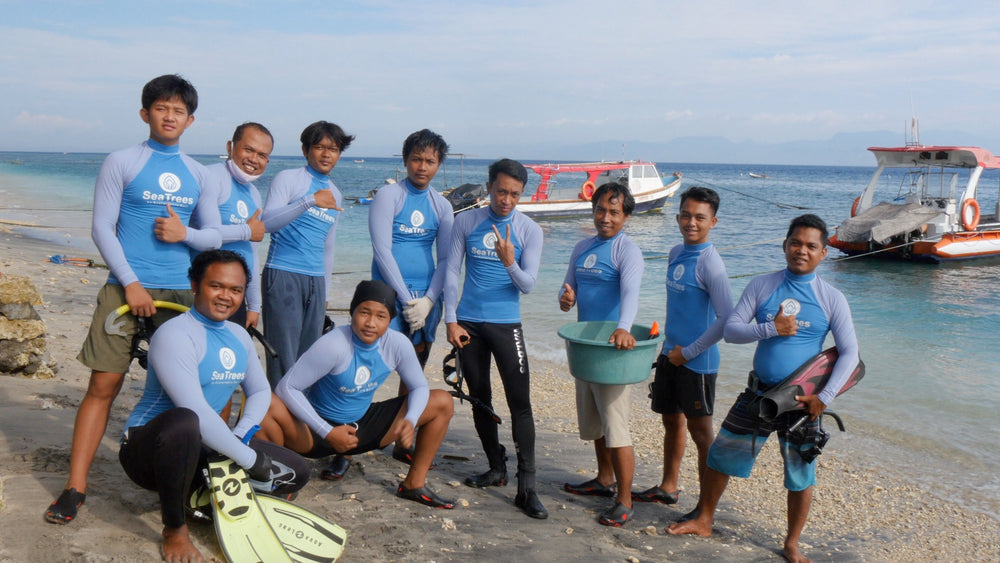
This project is structured around the belief that reef recovery and community wellbeing go hand in hand. Raising Coral trains and pays local coral gardeners, hosts annual environmental festivals, and brings local families and tourism operators together around a shared mission of reef stewardship.
4,000Corals outplanted
10+Permanent monitoring sites with annual 3D photogrammetry surveys
Seatrees is working with Raising Coral to restore coral reefs in Golfo Dulce and at Caño Island Biological Reserve, off the coast of Costa Rica's Osa Peninsula. Through coral propagation, outplanting, photogrammetry monitoring, and community-based reef management, this project accelerates reef recovery in the face of climate change.
The project focuses on:
Rearing and outplanting 1,000 corals per year from 2026 through 2029 across Golfo Dulce and Caño Island (4,000 corals total)
Conducting long-term biodiversity monitoring and 3D photogrammetry surveys
Reducing bleaching through a rapid response plan involving shading devices, coral nursery depth adjustments, and Reef Star relocation
Using elevated Reef Star structures to increase coral survival and provide additional habitat for reef fish
Training and compensating local community members as coral gardeners
Hosting environmental festivals and school presentations to build ocean literacy
Conducting research using coral reef 3D models to improve restoration in practice
Golfo Dulce is a deep tropical fjord with unique oceanography. Sheltered from the ocean by the Osa Peninsula, its calm waters look tranquil and inviting. But it rains a lot here (over 20 feet each year!), and sediment runoff from the nearby rainforest and farmland makes the water murky. But some reefs in the gulf have shown resilience to these unique conditions.
Caño Island sits offshore within a no-take marine protected area. It supports some of the highest coral diversity and fish biomass on Costa Rica, with more than 200 fish species recorded. Even with protected status, the 2023-24 El Niño triggered significant declines in coral cover. Scientists consider active restoration to be essential if Caño is to remain one of Costa Rica's key Pacific reef refuges.
The reefs of both locations are home to endangered species including Porites evermanni (lobe coral), Pocillopora verrucosa (cauliflower coral), hawksbill sea turtles, and scalloped hammerhead sharks. The restoration and monitoring work funded by this project directly benefits these species and the fishing and tourism communities that depend on healthy reefs.
How it works
Select. Grow. Outplant.
Here's how coral restoration in Costa Rica works.
1.Resilience-first coral selection
Coral fragments are collected from colonies that survived past bleaching events. These thermally tolerant genotypes are the foundation of the restoration program, chosen for their ability to withstand warming waters.
2.Underwater nurseries
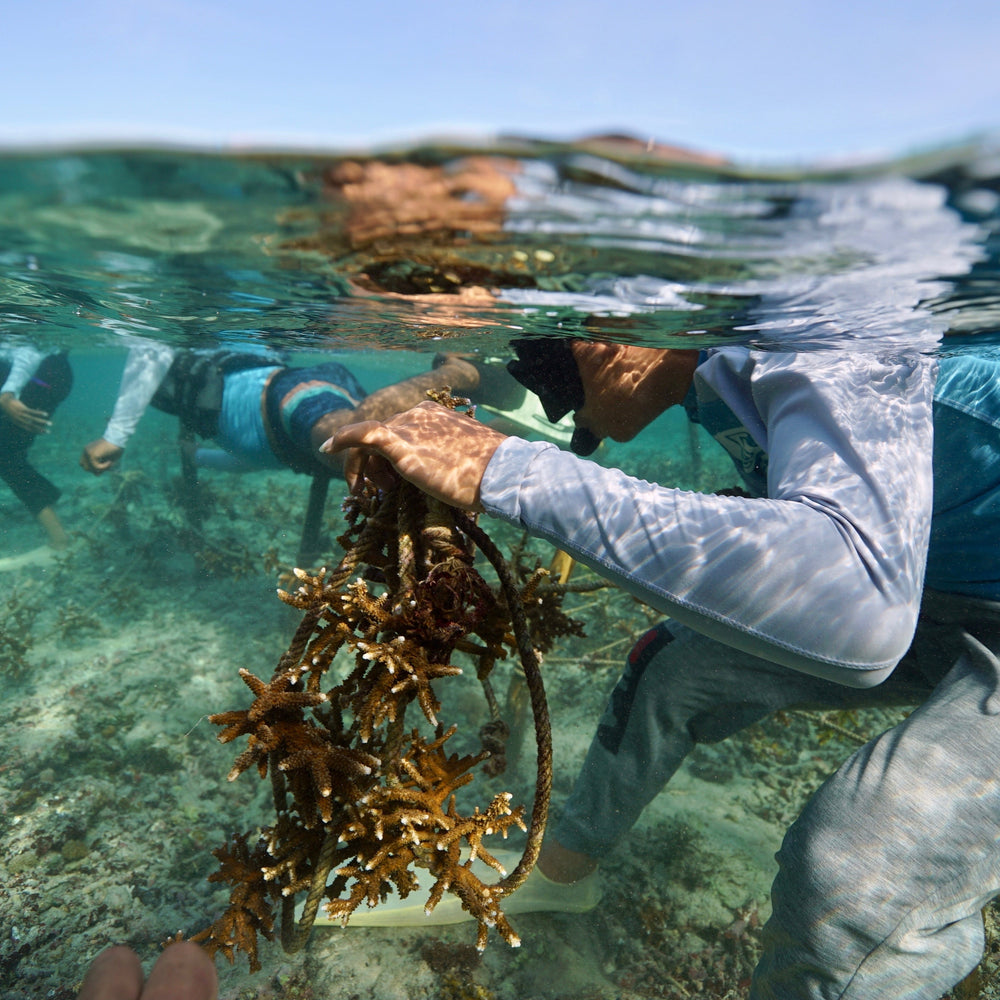
Branching coral fragments are suspended on underwater "tree" structures or rope lines for 8 to 10 months. Massive corals are fragmented using a diamond saw, mounted on ceramic plugs, and grown in nursery racks for around six months before outplanting.
3.Outplanting to the reef
Once large enough, corals are secured to the reef. Branching corals are attached to Reef Stars, hexagonal metal frames that lift corals off the sediment-laden seafloor and provide 3D habitat structure. Massive corals are attached directly to the reef substrate.
4.Bleaching contingency planning
During marine heatwaves, the team responds in real time by lowering nursery structures to cooler depths, installing temporary shading devices to cover sensitive corals, and by suspending outplanting until thermal stress subsides.
5.3D monitoring through photogrammetry
Raising Coral photographs the reef with Samsung Galaxy phones in Samsung's "Ocean Mode" to build 3D coral reef models. A time series of models tracks coral growth, reef structure and biodiversity recovery, and is shared with communities, scientists, and policymakers.
6.Community training and co-management
Local coral gardeners are trained through a comprehensive two-week program covering diving, restoration techniques, leadership, and first aid. They are compensated for their fieldwork and become long-term stewards of the reefs in their backyard.
Nursery
Outplanting
Monitoring
See the restoration in action
Project partner
Raising Coral
Raising Coral is a Costa Rican nonprofit dedicated to the restoration of coral reefs in Costa Rica. Their team works to improve the resilience of reef ecosystems that are essential to marine life, local fisheries, tourism, and coastal communities.
Raising Coral began piloting coral propagation in Golfo Dulce in 2016 as part of a collaboration with the University of Costa Rica, representing one of the first major reef restoration projects on the Pacific Coast of Central America. Since then, they have installed 16 nurseries and outplanted more than 6,000 corals across Golfo Dulce. They recently expanded their work to Caño Island in 2025.
Raising Coral's approach is grounded in the belief that restoration only works when centered around local communities. Through their coral gardener program, Coralmanía community outplanting events, school presentations, and environmental festivals, Raising Coral has built a growing movement of local reef stewards in the communities surrounding Golfo Dulce and the Osa Peninsula.
Seatrees evaluates every project against the 17 UN Sustainable Development Goals. The Costa Rica coral restoration project supports 5 of them.
Goal 4Quality EducationCoral gardener training and community presentations build ocean literacy and technical skills for local residents and youth.Explore all 17 UN Goals →
Goal 5Gender EqualityRaising Coral's team is currently more than 50% women and is expanding this goal to include local youth.Explore all 17 UN Goals →
Goal 8Decent Work and Economic GrowthCoral gardeners and boat captains are compensated for their fieldwork, strengthening the direct economic link between healthy reefs and local livelihoods.Explore all 17 UN Goals →
Goal 13Climate ActionThe project uses climate-smart restoration strategies, including bleaching contingency plans and thermally tolerant coral selection, to build reef resilience to marine heatwaves.Explore all 17 UN Goals →
Goal 14Life Below WaterThe core mission of the project is the active restoration and long-term monitoring of coral reef ecosystems in Costa Rica, supported by rigorous science and community stewardship.Explore all 17 UN Goals →
Biodiversity
A reef full of life
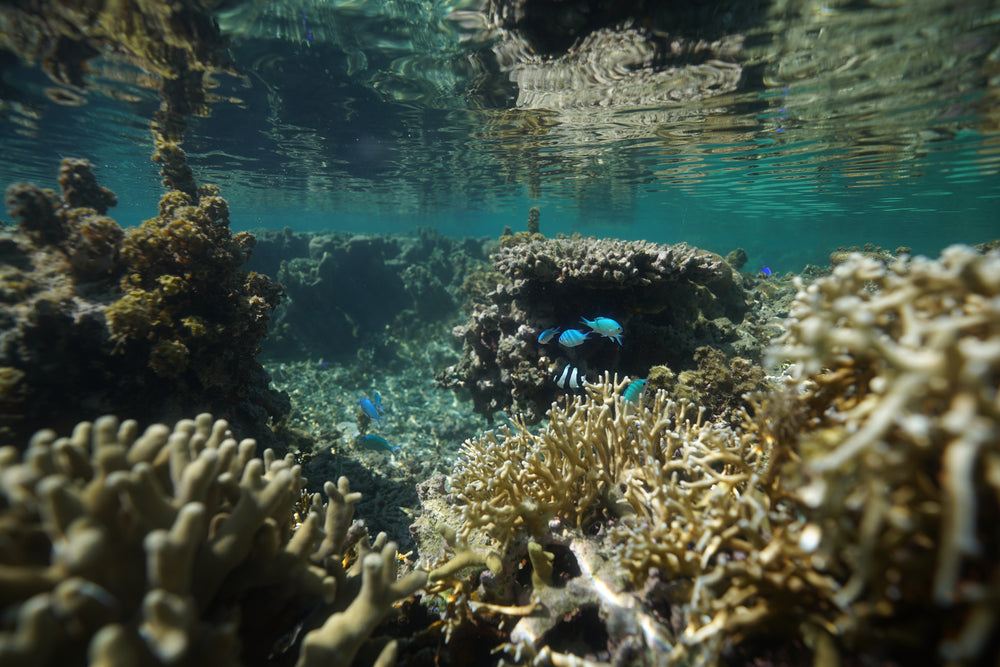
The reefs of the Osa Peninsula support an exceptional range of marine biodiversity. The project directly benefits coral species being outplanted, threatened reef fish, and charismatic megafauna that depend on healthy reef structure.
Species present at the project sites include:
Porites, Pavona, Pocillopora, and Psammocora corals, several of which are directly outplanted
Over 200 reef fish species at Caño Island, including commercially important snappers, jacks, grunts, groupers, and parrotfish
Green and hawksbill sea turtles
Whitetip reef sharks, whale sharks, and scalloped hammerhead sharks
Humpback whales, two populations of which use Golfo Dulce for several months each year
Green spiny lobster and endangered brown sea cucumbers
From the field
Life on the reef
A new way to fund reef restoration
This project issues Biodiversity Blocks, a type of marine biodiversity credit developed by Seatrees. Each Block represents one coral planted, plus all the stewardship work that surrounds it.
More than planting a coralWhen you purchase a Biodiversity Block, you support the actions that make restoration effective: long-term monitoring, community engagement and training, bleaching contingency planning, restoration research, and annual reporting.
Built for transparencyThis project follows the Seatrees Crediting Protocol for Marine Restoration v3.2, a peer-reviewed scientific framework. Donors can track their impact through a real-time donor dashboard, and annual monitoring reports document ecological and social outcomes over the full five-year project period.
What the science saysA Baseline Assessment across Golfo Dulce and Caño Island, drawing on 45 years of scientific data and new 3D photogrammetry surveys, set a Biodiversity Spectrum for six key metrics. The project is targeting a 34% average biodiversity uplift across both locations over five years. The full Project Description Document has been certified by two independent validators.Read the project description →
Explore other coral projects
Ped, Nusa PenidaCoral reef restoration
Viti Levu, FijiCoral reef restoration
Plant your first Seatree, FREE!
Choosing a selection results in a full page refresh.
Opens in a new window.
Ask AI
ONLINE
— STORE ASSISTANT —
Anything you need, Just ask.
Cart
0 items
PAIRS WELL WITH
0/100
Your cart is empty
Browse our collection and add your favorite items.