Adopt (or gift!) one of 100 giant clams now being restored at our Seatrees site in Bali.
Name it yourself, name it after a friend, or choose from one of our hilariously pre-named clams — the choice is yours. Every adoption comes with a personalized digital certificate featuring your clam’s name and photo, making it a meaningful and sustainable gift that actually restores a reef.
150Baby giant clams translocated in November 2025
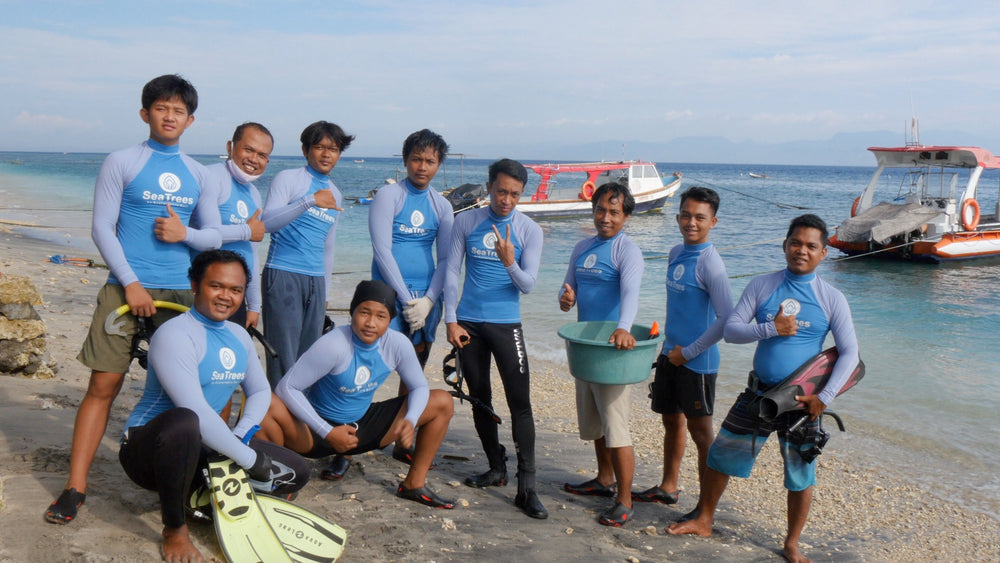
20Ocean Gardener staff, including six women
100 yrsLifespan of a healthy giant clam
About the project
Why Giant Clams?
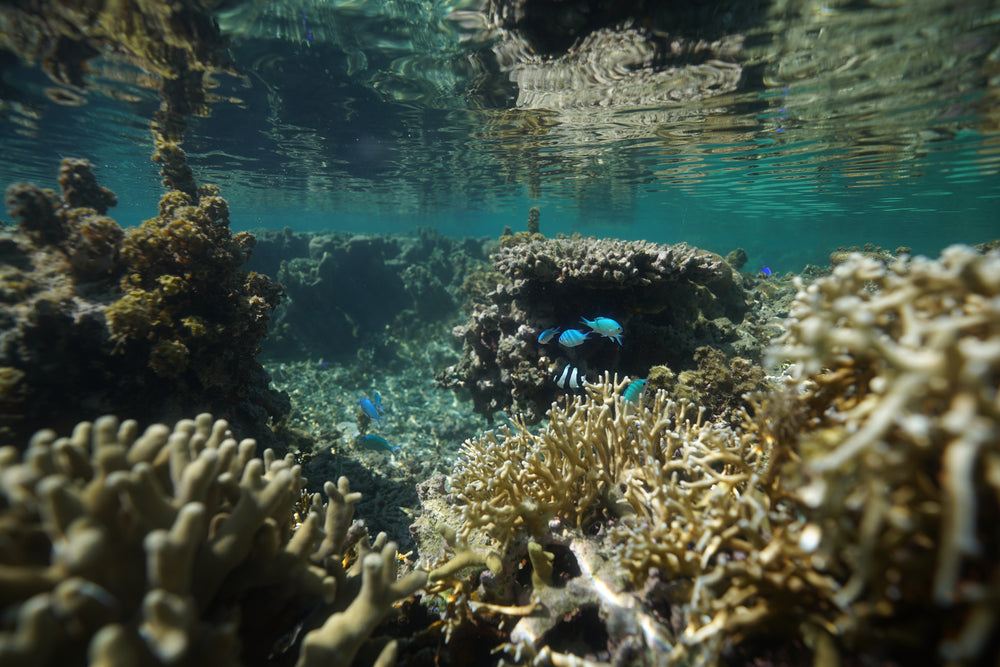
Giant clams act as ecological powerhouses on coral reefs. Their presence increases coral survival, improves water quality, and enhances overall ecosystem productivity.
Clams support coral growth by:
Sharing symbiotic algae (zooxanthellae) that can seed surrounding corals
Releasing nutrient-rich waste that fuels coral and algal growth
Filtering seawater, improving clarity and reducing excess nutrients
Creating habitat with their large, sculptural shells
Altering water flow, enhancing micro-habitats for corals and invertebrates
As climate change accelerates reef decline, integrating species like giant clams into restoration helps increase adaptability and ecological stability—a critical priority for coral conservation.
How it works
The clam journey
In November 2025, 150 baby Tridacna maxima clams were moved from a land-based nursery in northern Bali to the Seatrees coral restoration site on Nusa Penida — a Giant Clam Garden to accelerate coral recovery.
1.Nursery to transport
Clams are placed onto custom concrete plates, five per plate, and travel from the Bali nursery in insulated boxes of cool, stable seawater.
2.Arrival in Nusa Penida
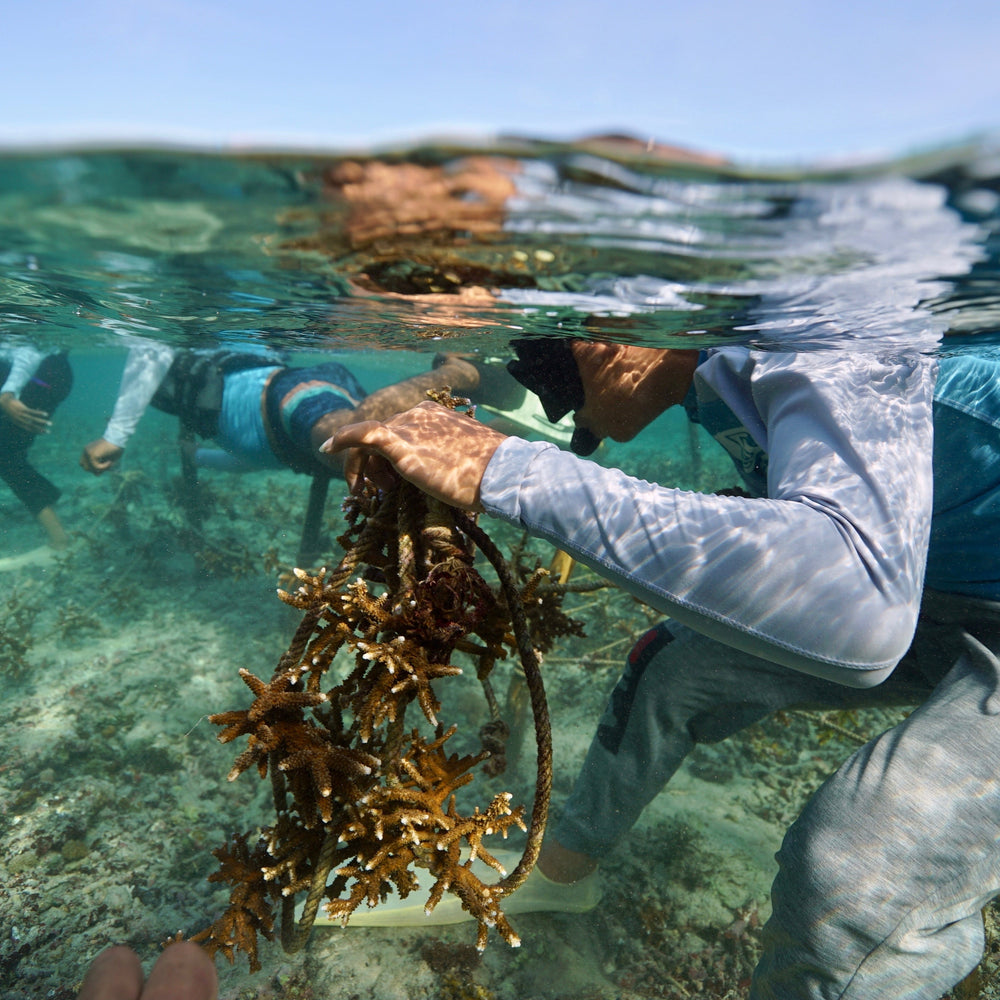
The Ocean Gardener dive team moves the clams into underwater baskets fitted with mesh covers, straps and ropes for secure attachment to the reef.
3.Underwater placement
Clams stay on their plates for about two years, growing to 20–30 cm. In healthy conditions they can live up to 100 years.
Project partner
Ocean Gardener
Seatrees partners with Ocean Gardener, a local Indonesian non-profit organization with over 20 years of hands-on experience farming coral that are key to restoration and biodiversity. Their team of marine biologists, divers, and coral farmers is dedicated to restoring the degraded reefs while educating the local community on best practices to protect the reefs moving forward.
Zoom into the Nusa Penida project site — live monitoring plots, planting zones and updates mapped by our partners on explorer.land.
From the field
Life on the reef
A world-first for reef restoration
Species spotlight: Tridacna maximaThe Small Giant Clam ranges from the Central Pacific to the Red Sea, in brilliant blues, greens and browns. It opens its mantle by day to photosynthesise, hosts algae that help power surrounding corals, and adds long-term structure to the reef.
Maintenance and monitoringOcean Gardener monitors the site regularly to manage two major coral predators, Drupella snails and Crown-of-Thorns Starfish. Quarterly predator-control data feeds the Seatrees database to track regional reef-health trends.
Conservation significanceBelieved to be a world-first giant clam translocation of its kind, the effort was celebrated by Indonesian authorities, who attended the Seatrees x Ocean Gardener delivery.
Plant your first Seatree, FREE!
Choosing a selection results in a full page refresh.
Opens in a new window.
Cart
0 items
PAIRS WELL WITH
0/100
Your cart is empty
Browse our collection and add your favorite items.