Make a difference by planting a mangrove Seatree in Laguna San Ignacio, Baja, Mexico!
Your contribution supports the restoration of 25 acres of vital mangrove habitat through the planting of 100,000 mangrove trees in the El Dátil region. In partnership with WILDCOAST and the local community, this project is led by the remarkable women of Mujeres de El Dátil, and creates living-wage employment, provides training opportunities, and empowers gender equity. Trained in mangrove restoration techniques, the Mujeres de El Dátil plays a critical role in seedling collection, planting, monitoring, and maintaining restored sites.
Every mangrove you help to plant:
Provides living-wage employment to the local community.
Improves the livelihoods of 250+ inhabitants of El Dátil.
Trains 11+ women in project management and monitoring.
Protects local areas and communities from sea-level rise and increased storm surges.
Safeguards critical gray whale nursery habitat.
Tax Deductible: SeaTrees is a program of 501c3 non-profit Sustainable Surf - meaning that Planting and Restoring SeaTrees is tax-deductible in the USA. Keep your donation receipt.
100,000Mangrove propagules planted
10 acresof intertidal zones in Estero El Dátil were reforested with the planting of 60,000 red mangrove seeds
43people employed by project, 31 of which are women
250+Inhabitants of El Dátil benefiting
How it works
Collect. Plant. Monitor.
The Mujeres de El Dátil lead every stage — from collecting seedlings to monitoring the restored sites.
1.Collect
Local women (mujeres) collect red mangrove seedlings and propagules from the lagoon—the first step in every planting season.
2.Plant
Seedlings are planted in patches—a proven design that helps retain sediment and shelter young plants from the lagoon’s strong currents.
3.Monitor
The team tracks survival and maintains restored sites, so red mangroves can form a barrier while other species establish behind them.
See the restoration in action
Project partner
WILDCOAST
Seatrees has partnered with WILDCOAST, a nonprofit organization founded in 2000 that focuses on conserving coastal and marine ecosystems and addressing climate change with natural solutions.
Global impact
Sustainable Development Goals
Seatrees evaluates every project against the 17 UN Sustainable Development Goals. The Laguna San Ignacio mangrove project supports 7 of them.
Goal 1No PovertyThe families and communities of the Laguna San Ignacio area depend on the local ecosystem for income and survival. Recently, climate change and its increasingly intense tropical storms and sea-level rise pose emerging threats to this region. In partnership with WILDCOAST, this project has created several paid jobs and training opportunities for local communities, allowing for an increase in stable income in the region and potential for future expansion. This project creates jobs and a stable income in a remote area without municipal services and limited economic opportunities. Additionally, the local community is provided with training and capacity building to develop conservation projects and create job opportunities through programs financed by the protected area.Explore all 17 UN Goals →
Goal 2Zero HungerThe communities of the Laguna San Ignacio area are active fishing cooperatives, whale watching outfitters, and small-scale ranchers, all relying primarily on the surrounding ecosystem for food sources. The mangroves planted through this project will provide nurseries and feeding grounds for commercially important fisheries and other wildlife, both of great economic value, which sustain food and income for the local communities.Explore all 17 UN Goals →
Goal 5Gender EqualityGender equality is a fundamental goal of this project. With the support of SeaTrees, WILDCOAST is working with women in Laguna San Ignacio to plant 40,000 mangroves over 25 acres of tidal zones. This will allow local communities to mitigate climate change while creating a habitat suitable for fish, shellfish, and other important wildlife. The Laguna San Ignacio project is led by a group of 11 women trained in mangrove restoration and responsible for conducting all related activities, including mangrove seedling collection, planting, boat operation, and project monitoring. This will also build and increase these women’s capacities to manage the project, train others, and develop communication skills to advocate for themselves and their community for future generations.Explore all 17 UN Goals →
Goal 8Decent Work and Economic GrowthLaguna San Ignacio is a UNESCO World Heritage Site located within the El Vizcaíno Biosphere Reserve, a 6.2 million acre natural protected area, and is home to mangrove forests essential to sustaining fisheries in the area. These mangrove forests play a significant role in the region’s local economy, as local communities rely predominantly on fishing to generate income and a food source. Through this project, local community members obtain living-wage employment to carry out mangrove restoration activities and support commercially important local fisheries through mangrove coverage expansion.Explore all 17 UN Goals →
Goal 13Climate ActionCoastal communities in Laguna San Ignacio have historically faced detrimental impacts of climate change through increased storm surges and sea-level rise, flooding the area each year. Through this project, WILDCOAST is educating community members about the threats of climate change and the benefits of mangrove restoration towards mitigating and adapting to those impacts. Additionally, the local community will be trained in monitoring practices to estimate mangrove survival rates and conduct maintenance to ensure the project's long-term success and restoration effort. Overall, this project will plant 40,000 mangroves over 25 acres of tidal zones, sequestering large amounts of CO2.Explore all 17 UN Goals →
Goal 14Life Below WaterThe mangrove forest in Laguna San Ignacio is a critical nursery for various species of great economic value, including mussels, cockles, clams, shrimp, and fish that use the mangroves as a breeding grounds. Several of these species will be directly harvested from the red mangroves being restored. Laguna San Ignacio is also home to one of the world’s last three undeveloped California gray whale reproductive lagoons. This project and all related restoration activities will ensure the success of the local ecosystem while also safeguarding this critical birthing habitat for years to come.Explore all 17 UN Goals →
Goal 15Life on LandPrior to this project, Laguna San Ignacio faced direct threats from storm surges and increased sea-level rise. These threats would only have worsened, and critical coastal habitats would have been significantly degraded if these mangrove forests were not restored and used as a buffer against climate change impacts. Together, SeaTrees and WILDCOAST will plant 40,000 mangrove trees across 25 acres of mangrove habitat with the help of local community members. This project will work to contribute to reversing climate change while safeguarding both marine and terrestrial biodiversity.Explore all 17 UN Goals →
On the ground
Explore the restoration site
Explore the Laguna San Ignacio restoration site — planting areas, monitoring and updates mapped by our partners on explorer.land.
From the field
A little further reading
Threatened by Sea Level RiseClimate change is already affecting Laguna San Ignacio ecosystems and communities. Sea level rise, along with the high tides present in Laguna San Ignacio, intensified currents in estuaries that, in turn, generated erosion of the main channels. Without the first protection barrier that red mangroves offer, there is a risk for greater habitat loss.
Sustainable DevelopmentThis project provides living-wage employment and training opportunities for the local community, empowers gender equity, protects the area from increased climate change impacts, and safeguards critical habitats for several vulnerable species.
Rizophora mangleRed mangroves help form a barrier between strong currents and other environmental factors, helping the establishment of other mangrove species behind it. The seedling planting design in Laguna San Ignacio is based on the principle of patches. This methodology has proven to be successful to retain sediment, resulting in better protection for the seedlings. Over time, this system favors colonization of other species such as Laguncularia racemosa and creates less competition for light and space.
Explore other mangrove projects
Marereni, KenyaMangrove restoration
Papua, IndonesiaMangrove restoration
Plant your first Seatree, FREE!
Choosing a selection results in a full page refresh.
Opens in a new window.
Cart
0 items
PAIRS WELL WITH
0/100
Your cart is empty
Browse our collection and add your favorite items.


 Plant
 Plant
 Restore


 Threatened by Sea Level RiseClimate change is already affecting Laguna San Ignacio ecosystems and communities. Sea level rise, along with the high tides present in Laguna San Ignacio, intensified currents in estuaries that, in turn, generated erosion of the main channels. Without the first protection barrier that red mangroves offer, there is a risk for greater habitat loss.
 Sustainable DevelopmentThis project provides living-wage employment and training opportunities for the local community, empowers gender equity, protects the area from increased climate change impacts, and safeguards critical habitats for several vulnerable species.
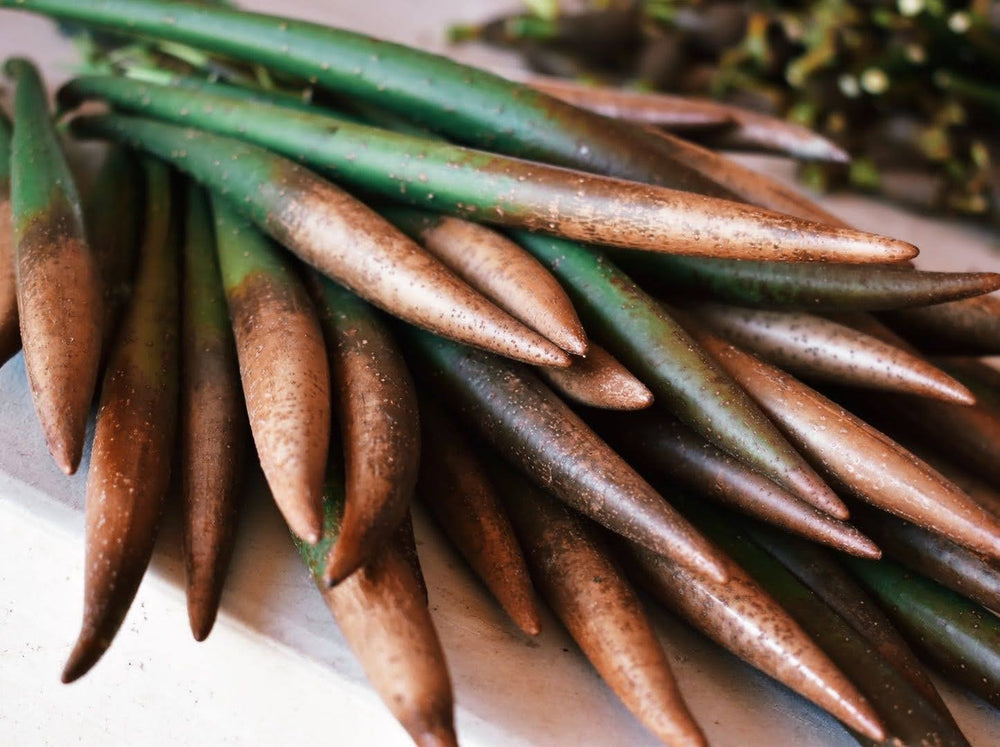 Rizophora mangleRed mangroves help form a barrier between strong currents and other environmental factors, helping the establishment of other mangrove species behind it. The seedling planting design in Laguna San Ignacio is based on the principle of patches. This methodology has proven to be successful to retain sediment, resulting in better protection for the seedlings. Over time, this system favors colonization of other species such as Laguncularia racemosa and creates less competition for light and space.
