Welcome to your Seatrees project!
Thanks for partnering with Seatrees to restore a portion of the watershed in the Florida Keys across two sites within Big Pine Key: Camp Sawyer & Big Munson Island.
We’ve created this doc to help you share the impact you’re having and inspire your community to follow in your footsteps. Think of this doc as a detailed FAQ - a way to guide the conversation. For larger partners, we're happy to explore bespoke ideas.
We use our social channels (mainly Instagram) to promote our brand partners and newsletter, which is featured on our website, to highlight specific things our brand partners are doing that align with our mission and impact. Follow us: @sea.trees
Scroll to the bottom of your dashboard to access all the media assets provided to you for this project.
What’s our mission/vision?
On World Ocean Day, June 8, 2024, we announced our second major milestone of 4 million Seatrees planted + protected.
We're already working hard to find quality new projects where we can work together to plant the next Million Seatrees. Longer-term, our goal is to support 100 blue carbon projects in threatened coastal ecosystems by 2030, in turn becoming a global leader in developing blue carbon projects.
We believe the ocean has superpowers, and we can work with it to reverse climate change. But there's no time to waste. The global scientific consensus is clear that we have the next 10 years to reduce our collective carbon footprint to avoid passing a catastrophic climate tipping point.
Thousands of people and hundreds of brands have joined us on our mission to take action on climate change by regenerating coastal ecosystems. We’re excited to work with YOU to enable and enhance the ocean’s superpowers.
Where are we restoring watersheds right now and what impact is it having?
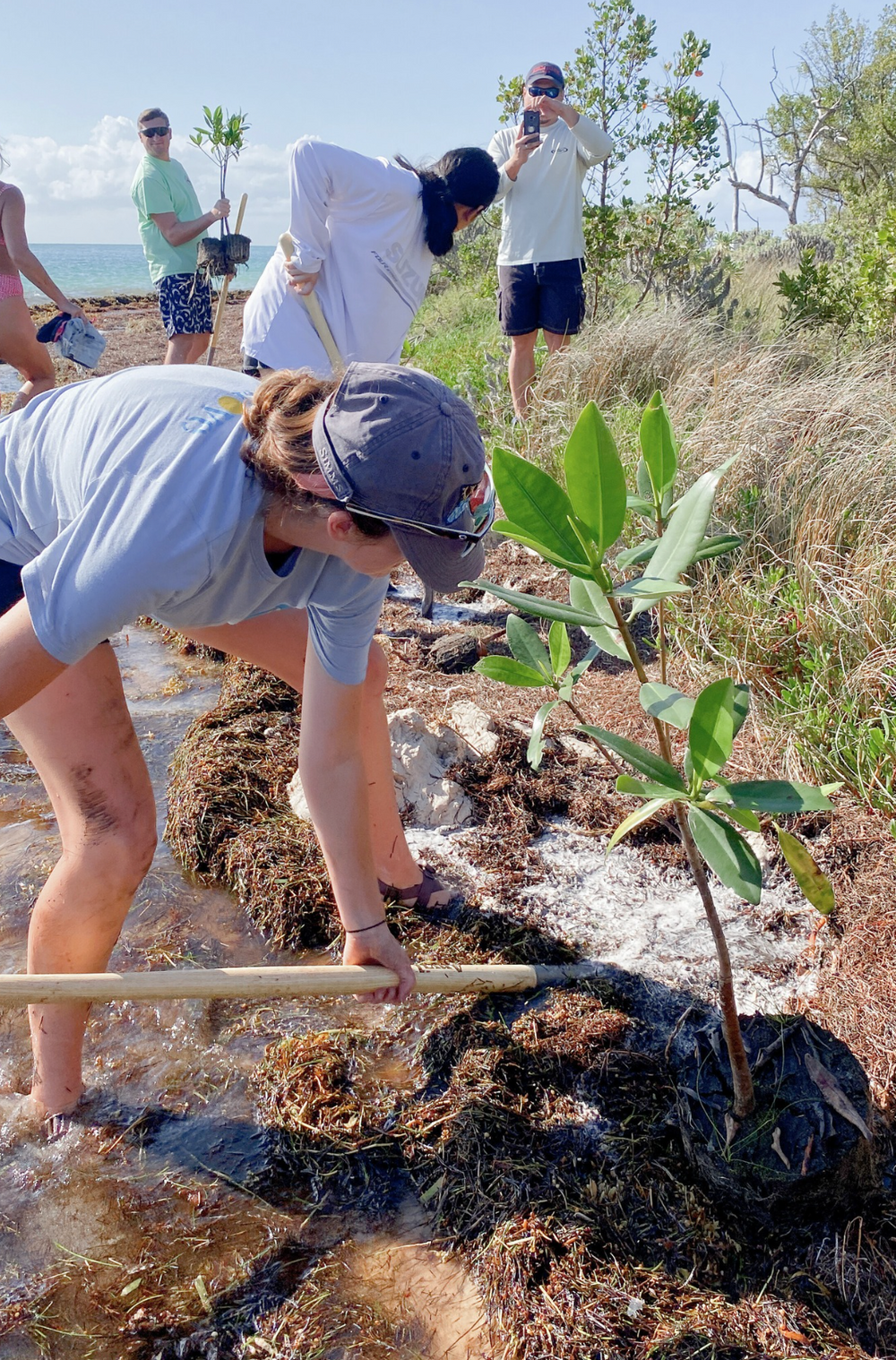
Seatrees, in partnership with Coastlove, is working to restore degraded dune ecosystems in the Florida Keys. South Florida is home to a diverse array of coastal ecosystems, including mangrove forests, coastal dunes, wetlands, and hardwood hammocks - all of which have been negatively affected by coastal development and storms in recent years. By restoring these coastal dunes, we're able to provide habitat for countless species, beautify cities and parks, increase storm protection, prevent coastal erosion, and increase carbon sequestration.
Dune ecosystems across the Florida Keys were destroyed by Hurricane Irma in 2017 which devastated both the old growth upland forest and local mangrove forests.
To regenerate this critical coastal watershed, Seatrees and Coastlove are restoring 12,000 sqm (129, 167 sq-ft) of degraded dune systems across those two sites within Big Pine Key: Camp Sawyer & Big Munson Island.
Engaging the local community is a central focus of the project, with opportunities for the public to attend volunteer restoration events. Select volunteer opportunities will also be geared towards youth empowerment and unrepresented communities in order to expose youth to their local habitats, and foster a broader sense of environmental stewardship.
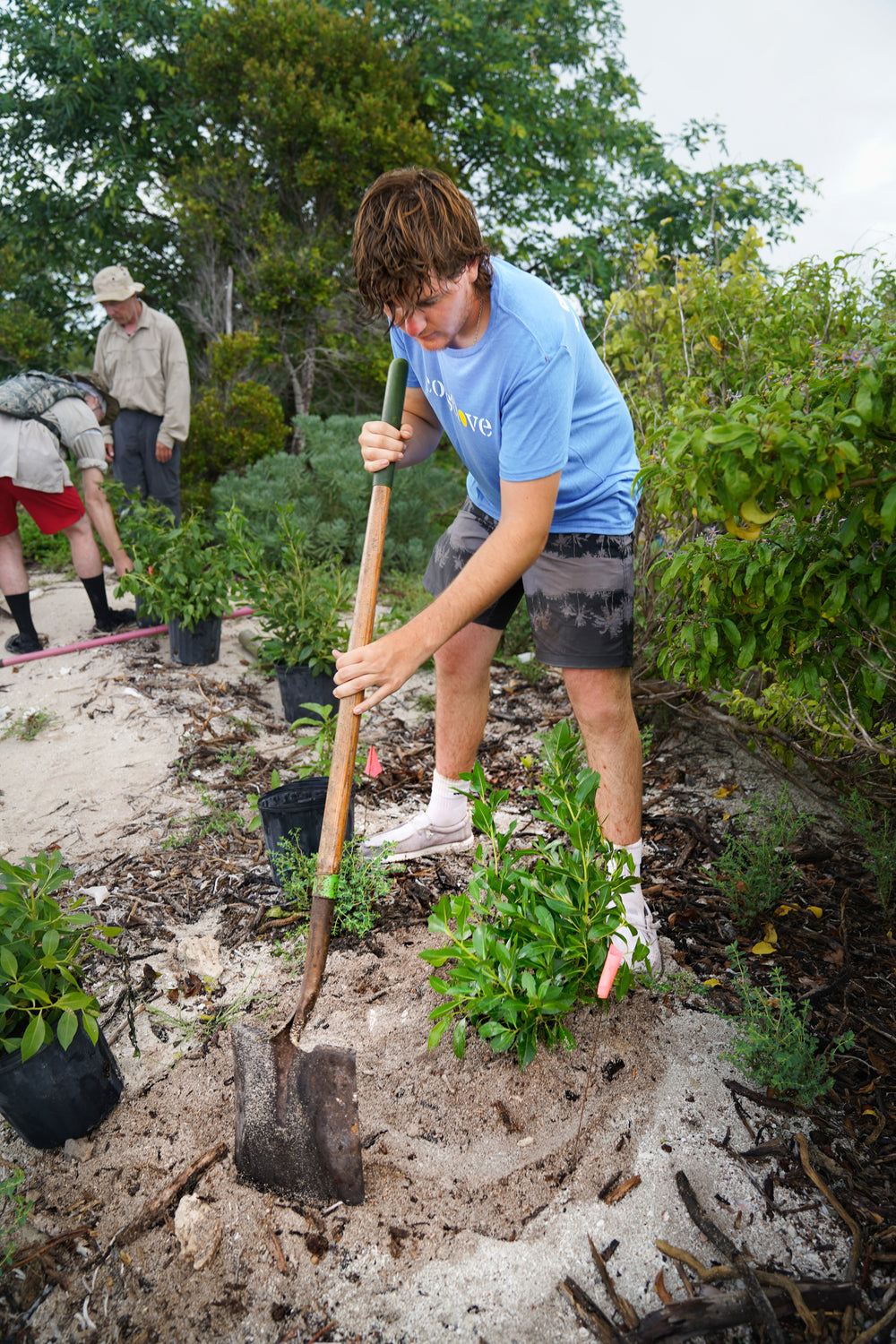
Together with Coastlove, this project will work in collaboration with the Scouts of America and restoration of the dune will include the planting native species to stabilize the soil in order to increase biodiversity and provide shade to campers.
This project is not just about restoration; it's an educational opportunity for Scouts to learn about conservation, get hands-on experience with tree planting, and play an active role in caring for our environment. To learn more, please visit the project page on our website here.
How is my “donation” spent?
Most of the money we receive for a specific project goes toward that project. This includes the restoration itself, as well as assessments/auditing of the project, site visits and regular meetings with the project managers, developing content and stories, and updating our website with progress updates.
We hold a portion of the donation to invest in new and start-up blue carbon and research projects that meet our assessment criteria.
Like all non-profits, we also use a portion to fund the operations of our organization. As a registered non-profit, our financials are publicly available - and approximately 15-20% of our income goes towards operational expenses.a
About Seatrees
Seatrees is a nonprofit organization that restores and protects coastal ecosystems around the world to reverse climate change, enhance biodiversity, and support local communities. We use a science-based approach to regenerate coral reefs, kelp forests, mangrove forests, seagrass meadows, and coastal watersheds. Our projects support local community restoration efforts and provide tangible ways for individuals and brands to create a more resilient planet for future generations.
Why coastal watersheds?
Watersheds provide critical benefits to our planet both above and below ground. They can capture and store atmospheric carbon dioxide at 10x the rate of a mature tropical forest by sequestering it in the ground for many years.
By storing carbon in the ground in its biomass and soils, watersheds provide improved soil structure and stability that leads to:
- Reduced soil erosion.
- Improved soil biodiversity.
- Increased nutrient holding and use capacity.
- Increased water holding capacity.
- Increased crop yields and profitability.
- Improved water quality in runoff into the ocean.
Watersheds are also high in biodiversity, serving as critical habitats for wildlife and rare and threatened species, providing defense against storms, absorbing flood waters, and deferring wave action from the ocean.
Without healthy watersheds, the risk of pollutant and sediment loading is much higher, leading to decreased water supplies, water quality, and potentially devastating effects on the offshore local marine ecosystems. By restoring coastal watersheds worldwide, we are not only preventing carbon from being released back into the atmosphere but also providing sustainable benefits for local communities that depend on these areas for survival.
How do you ensure the impact is happening?
We have a thorough vetting process for every new project we consider. We support a limited number of projects that meet our criteria and can prove that ‘SeaTrees’ are not only being planted, but that they are being protected in the longer term.
The process we go through is underpinned by science and many years of experience managing large-scale restoration and carbon sequestration projects. It’s a long process built on these seven SeaTrees questions:
- Is this project connected to the ocean?
- Who's the planting partner, and how credible are they?
- Is it a region that people are interested in, and how often can we get there?
- Does this place have global/political issues? Any other red flags?
- How does this project align with the UN SDG's? What social impact does this have?
- Do the economics of this project stack up?
- Is this a scalable solution?
We visit all of our projects on an annual basis (more often if we can), and we require our project partners to provide regular updates.
Please share some visuals with us!
We’ll use relevant content from your website and social channels, but if you have any specific please let us know and we’ll determine whether it fits with our brand.
Do share your logo! We’ll display it proudly on our Brand Partners page.