
Welcome to your Seatrees project!
Thanks for partnering with Seatrees to restore kelp forest ecosystems through regenerative seaweed farming in Nazaré, Portugal! We’ve created this doc to help you share the impact you’re having and inspire your community to follow in your footsteps. Think of this doc as a detailed FAQ - a way to guide the conversation. For larger partners, we're happy to explore bespoke ideas.
We use our social channels (mainly Instagram) to promote our brand partners and newsletter, which is featured on our website, to highlight specific things our brand partners are doing that align with our mission and impact. Follow us: @sea.trees
Scroll to the bottom of your dashboard to access all the media assets provided to you for this project.

What’s our mission/vision?
On World Ocean Day on June 8, 2024, we announced our second major milestone of 4 million Seatrees planted + protected.
We're already working hard to find quality new projects where we can work together to plant the next Million Seatrees. Longer-term, our goal is to support 100 blue carbon projects in threatened coastal ecosystems by 2030, in turn becoming a global leader in developing blue carbon projects.
We believe the ocean has superpowers, and we can work with it to reverse climate change. But there's no time to waste. The global scientific consensus is clear that we have the next 10 years to reduce our collective carbon footprint to avoid passing a catastrophic climate tipping point.
Thousands of people and hundreds of brands have joined us on our mission to take action on climate change by regenerating coastal ecosystems. We’re excited to work with YOU to enable and enhance the ocean’s superpowers.

Superpowers?
Yep, 90% of all carbon in the global carbon cycle is stored in the ocean. This is where it should be sequestered to reverse climate change.
Mangrove forests “suck” aka sequester, 5-10 times more CO2 out of the atmosphere per hectare than tropical rainforests. Much of that carbon is stored in the soil and sediment that make up a mangrove ecosystem.
Globally, kelp forests sequester as much CO2 as mangrove forests. 10% of kelp breaks off and sinks into the deep ocean - sequestering the CO2 it contains. The conservation of these ecosystems is critical to solving climate change and will protect the habitats of over 700 species of algae, invertebrates, and fish.
Known as the “rainforests of the sea,” coral reefs are the largest living structures on earth and support 25% of marine life. The conservation of these ecosystems is vital to coastal protection, scientific research, medication, fishing, eco-tourism, and more.
Where are we restoring kelp right now and what impact is it having?
Right now, Seatrees is restoring kelp in Nazaré, Portugal, through the Nazaré Regenerative Seaweed Farm, a pilot project led by our partner Hope Zones Foundation to bring kelp forests back to one of Europe’s most iconic and ecologically important coastlines.
The Portuguese west coast has lost much of its natural kelp canopy due to warming seas and human pressure. Our pilot site, located within the Aveiro–Nazaré Natura 2000 protected area, was chosen specifically because it represents a degraded baseline: low kelp recruitment, limited habitat complexity, and few natural reefs for kelp to recover on its own.
The project is currently in its active planting phase. Kelp spores are cultivated in a laboratory in Peniche. From there, university partners grow the spores into young kelp seedlings on lines, which are transported in coolers to Nazaré and outplanted onto the farm infrastructure just three meters below the surface.
The pilot project uses these seeded lines to form the foundation of a new underwater forest and allow scientists to closely monitor growth and ecosystem change using ROV surveys, eDNA sampling, and scientific diving, following a before–after–control–impact (BACI) framework. This scientific approach will track how biodiversity, habitat complexity, and carbon cycling evolve as the kelp establishes and expands.
While the project is still in its early stages, its significance is already global. Nazaré sits at the southern limit for many North Atlantic kelp species, making it a critical testing ground for kelp restoration in warming, high-energy ocean environments. The data generated here will help shape future kelp restoration efforts across exposed coastlines in Europe and beyond, creating a scalable model for biodiversity recovery, climate science, and community-led ocean regeneration.
How is my “donation” spent?
Most of the money we receive for a specific project goes toward that project. This includes the restoration itself, as well as assessments/auditing of the project, site visits and regular meetings with the project managers, developing content and stories, and updating our website with progress updates.
We hold a portion of the donation to invest in new and start-up blue carbon and research projects that meet our assessment criteria.
Like all non-profits, we also use a portion to fund the operations of our organization. As a registered non-profit, our financials are publicly available - and approximately 15-20% of our income goes towards operational expenses.a
About Seatrees
Seatrees is a nonprofit organization that restores and protects coastal ecosystems around the world to reverse climate change, enhance biodiversity, and support local communities. We use a science-based approach to regenerate coral reefs, kelp forests, mangrove forests, seagrass meadows, and coastal watersheds. Our projects support local community restoration efforts and provide tangible ways for individuals and brands to create a more resilient planet for future generations.

Why coastal marine ecosystems?
Unlike other tree planting and carbon offset programs and projects around the world, the sole focus of Seatrees is on blue carbon coastal ecosystems. As surfers and ocean-lovers, we choose these spaces because they’re places where we play. As environmentalists and ocean-health activists, we focus on blue carbon ecosystems because:
- They’re highly effective at carbon sequestration.
- They’re critical ecosystems on the verge of collapse.
- Methods exist to restore and regenerate these ecosystems.
- The story to protect ocean health is powerful and compelling.
- It’s not too late to act, but we must act fast.

Why Kelp Forests?
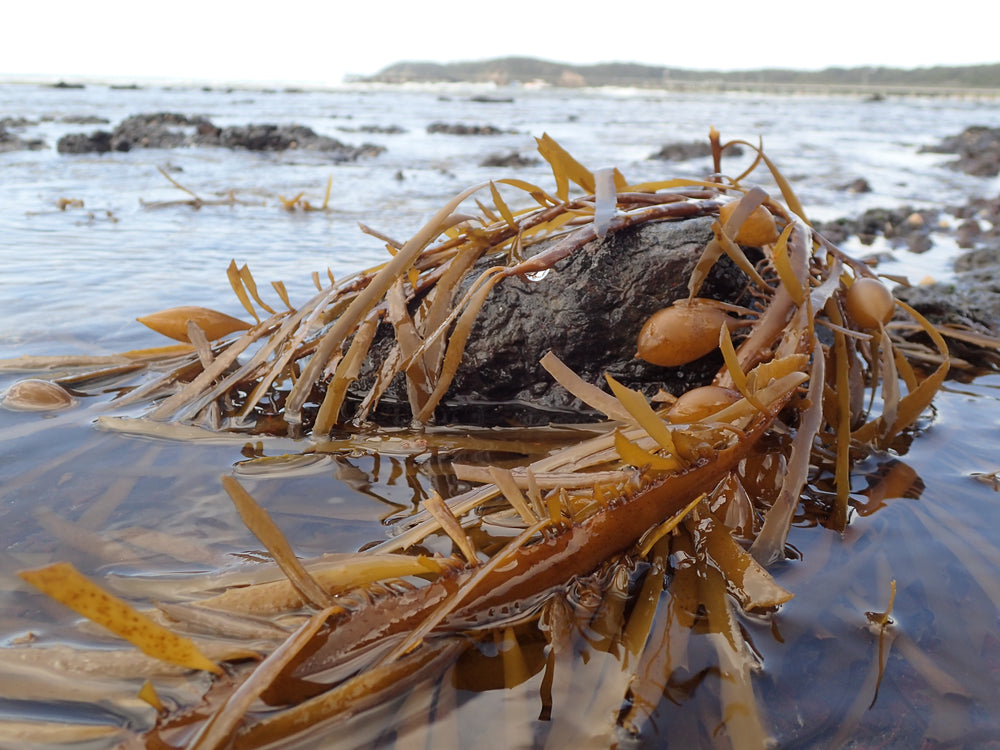
Similar to other blue carbon ecosystems, kelp forests are among the most degraded - but their disappearance is the hardest to see. Known as the "sequoias of the sea” for their rich biodiversity and carbon sequestration potential, kelp forests are home to hundreds of marine species.
Kelp forms dense forests on shallow reefs from Port Macquarie to Tasmania along the South Eastern coast of Australia. It provides food and habitat to hundreds of fish and invertebrates, including economically important abalone and crayfish. The degradation and eventual extinction of crayweed in Sydney has been detrimental to the local marine biodiversity and economy.
This project restores critical habitat for hundreds of species including abalone and crayfish, improves local marine biodiversity, and increases the likelihood of critical marine species returning to the area.
How do you ensure the impact is happening?
We have a thorough vetting process for every new project we consider. We support a limited number of projects that meet our criteria and can prove that ‘SeaTrees’ are not only being planted, but that they are being protected in the longer term.
The process we go through is underpinned by science and many years of experience managing large-scale restoration and carbon sequestration projects. It’s a long process built on these seven SeaTrees questions:
- Is this project connected to the ocean?
- Who's the planting partner, and how credible are they?
- Is it a region that people are interested in, and how often can we get there?
- Does this place have global/political issues? Any other red flags?
- How does this project align with the UN SDG's? What social impact does this have?
- Do the economics of this project stack up?
- Is this a scalable solution?
We visit all of our projects on an annual basis (more often if we can), and we require our project partners to provide regular updates.
Please share some visuals with us!
We’ll use relevant content from your website and social channels, but if you have any specific please let us know and we’ll determine whether it fits with our brand.
Do share your logo! We’ll display it proudly on our Brand Partners page.


