
Welcome to Seatrees+Climate
Thanks for partnering with Seatrees to plant + protect coastal ecosystems! By supporting Seatrees+Climate, you are directly contributing to global climate action through carbon sequestration and biodiversity restoration. Each Seatrees Pod delivers measurable, science-backed impact by supporting two vital ecosystem protection and restoration projects.
We’ve created this dashboard to help you share the impact you’re having and inspire your community to follow in your footsteps. Think of this doc as a detailed FAQ - a way to guide the conversation. For larger partners, we're happy to explore bespoke ideas. We use our social channels (mainly Instagram and LinkedIn) to promote our brand partners and newsletter, which is featured on our website, to highlight specific things our brand partners are doing that align with our mission and impact. Follow us: @sea.trees
Scroll to the bottom of your dashboard to access all the all the media assets for this project provided to you for this project.

What’s our mission/vision?
On World Ocean Day (June 8, 2024), we announced our second major milestone of 4 million SeaTrees planted + protected.
We're already working hard to find quality new projects where we can work together to plant the next million Seatrees. Longer-term, our goal is to support 100 blue carbon projects in threatened coastal ecosystems by 2030, in turn becoming a global leader in developing blue carbon projects.
We believe the ocean has superpowers, and we can work with it to reverse climate change. But there's no time to waste. The global scientific consensus is clear that we have the next 10 years to reduce our collective carbon footprint to avoid passing a catastrophic climate tipping point.
Thousands of people and hundreds of brands have joined us on our mission to take action on climate change by regenerating coastal ecosystems. We’re excited to work with YOU to enable and enhance the ocean’s superpowers.

Superpowers?
Yep, 90% of all carbon in the global carbon cycle is stored in the ocean. This is where it should be sequestered to reverse climate change.
Mangrove forests “suck” aka sequester, 5-10 times more CO2 out of the atmosphere per hectare than tropical rainforests. Much of that carbon is stored in the soil and sediment that make up a mangrove ecosystem.
Globally, kelp forests sequester as much CO2 as mangrove forests. 10% of kelp breaks off and sinks into the deep ocean - sequestering the CO2 it contains. The conservation of these ecosystems is critical to solving climate change and will protect the habitats of over 700 species of algae, invertebrates, and fish.
Known as the “rainforests of the sea,” coral reefs are the largest living structures on earth and support 25% of marine life. The conservation of these ecosystems is vital to coastal protection, scientific research, medication, fishing, eco-tourism, and more.

Seatrees+Climate is our most impactful package, combining ecosystem restoration and verified carbon protection to help you actively reduce your environmental footprint.
By taking this action, you’ll:
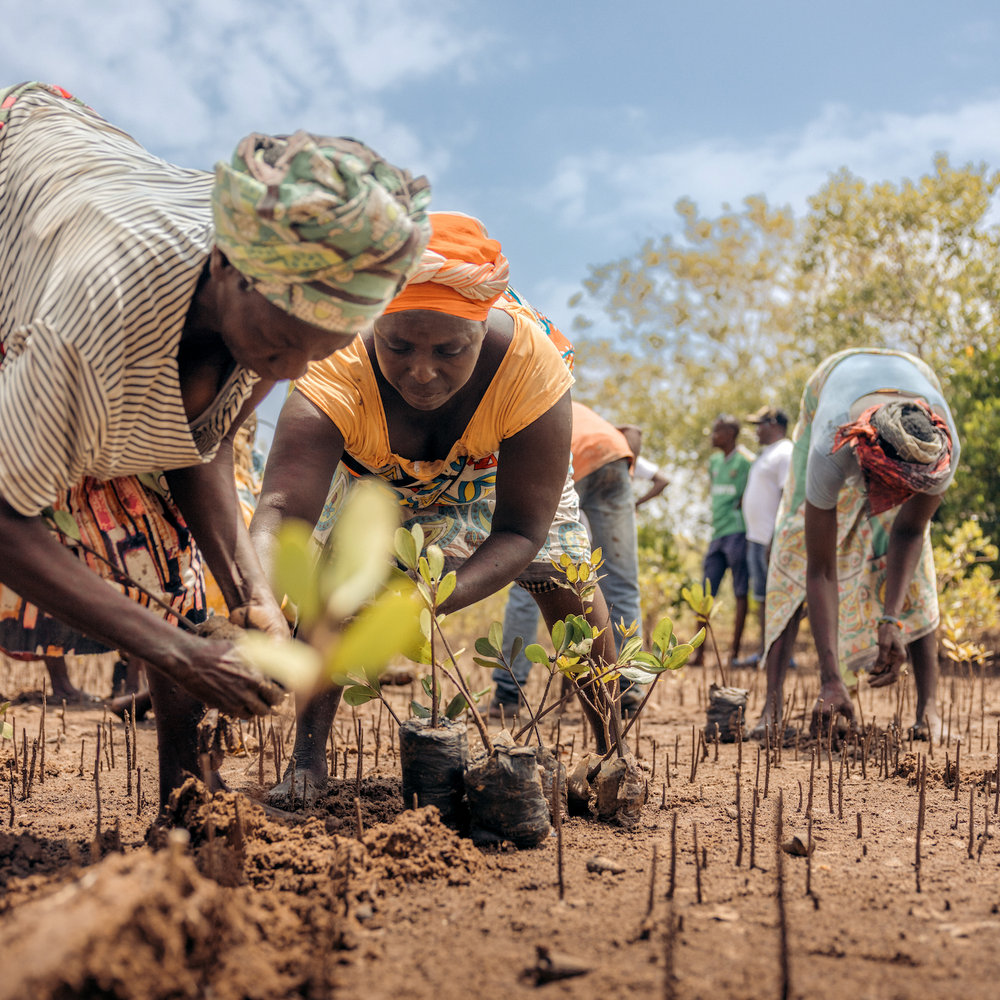
Plant 3 mangrove trees at our Seatrees+Biodiversity project in Marereni, Kenya - restoring critical coastal habitat, creating local jobs, and boosting biodiversity.
Sequester 1 tonne of carbon within a “ridge-to-reef” watershed REDD+ project in Colombia, certified by VERRA and CCBA.
About the Projects:

The Colombia Pacific Watershed Projects
This collection of projects protects 117,740 hectares of coastal watershed along the Pacific coast of Colombia. Located along Colombia's Pacific coast, this collection of projects includes three sites and mangrove forest-protected areas, Mutatá, Bahia Malaga-Bajo Calima, and Bajo Mira y Frontera and conserves a critical part of the South American tropical forest, which is home to 10% of the entire planet’s animal and plant species.
This area is one of Colombia’s poorest and historically marginalized regions. These projects improve the well-being of over 40,000 people, increase employment opportunities for the local afro-descendent and indigenous communities, implement systematic protection of mangrove forests, and maintain biodiversity.
Impacts:
- Generates 70 million tons of verified emissions reductions over 30 years.
- Improves the well-being of over 40,000 local people.
- Increases conservation of at least 10 % of coastal and marine areas.
- Promote ecotourism in the project area.
- Strengthens efforts to safeguard the area's cultural and natural heritage.
Mangrove Biodiversity Blocks
The Seatrees Biodiversity Blocks focus on restoring and protecting mangrove forests in Marereni, Kenya while supporting 10 years of ecosystem stewardship by the local community. Mangroves are among the most effective natural climate solutions, providing a powerful combination of carbon sequestration, habitat restoration, and coastal defense. By planting and nurturing mangroves, this project helps:
- Combat climate change by capturing and storing carbon at up to 5x the rate of tropical rainforests.
- Provide critical nursery habitats for fish and other marine species, supporting biodiversity and local fisheries.
- Protect coastal communities from storm surges, erosion, and rising sea levels.
- Generate sustainable livelihoods for local communities through restoration and conservation work.
When you purchase a Biodiversity Block, you’re not only contributing to the planting of a mangrove tree but also funding long-term conservation efforts that invest in the future of the local community stewards.
The project is expected to result in a 47% biodiversity uplift over the next decade, with performance reported annually to measure the real impact of each block.
What is Ecosystem Stewardship?
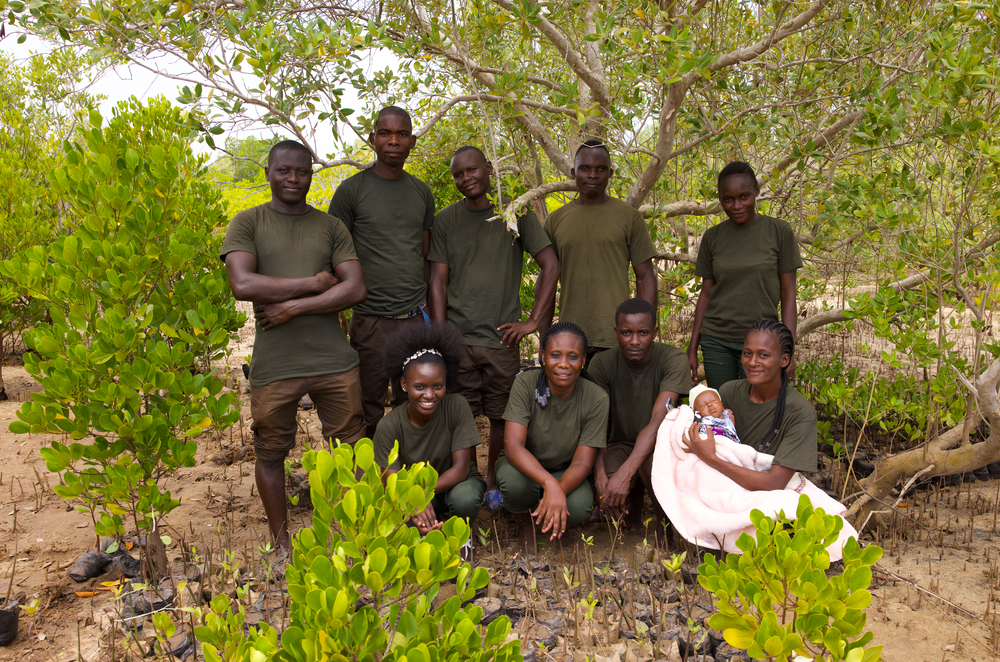
Ecosystem stewardship is the active care and protection of natural environments to ensure their long-term health and resilience. It involves restoring habitats, monitoring biodiversity, and empowering local communities to sustain the ecosystems they rely on. The Seatrees Mangrove Biodiversity Blocks are a long-term investment in ecosystem stewardship, going beyond traditional tree-planting projects. Each block plants one mangrove tree and provides funding and jobs for the local community for 10 years to protect and monitor its growth. This extended timeframe allows for more detailed monitoring, improved restoration tactics, and stronger long-term protections for the ecosystem.
Following a specific and published restoration methodology, the project incorporates better monitoring strategies, including sample and control plots, remote sensing for canopy cover, and comprehensive biodiversity tracking. In addition to measuring the success of planted trees, we assess surrounding areas to understand natural ecosystem changes. To ensure lasting impact, we fund a local forest guard service, hiring community members who act as the frontline defenders against illegal logging, poaching, and other threats. These guards work closely with Kenya Forest Service (KFS) to conduct joint patrols, providing legal enforcement and governance to protect the mangrove forests. By combining scientific rigor with community-led conservation, Seatrees ensures that these critical coastal ecosystems thrive for the long term.
What do I get?
When you purchase a Seatrees Biodiversity Block, your block is retired upon purchase on the Regen Network, ensuring its permanent contribution to ecosystem restoration.
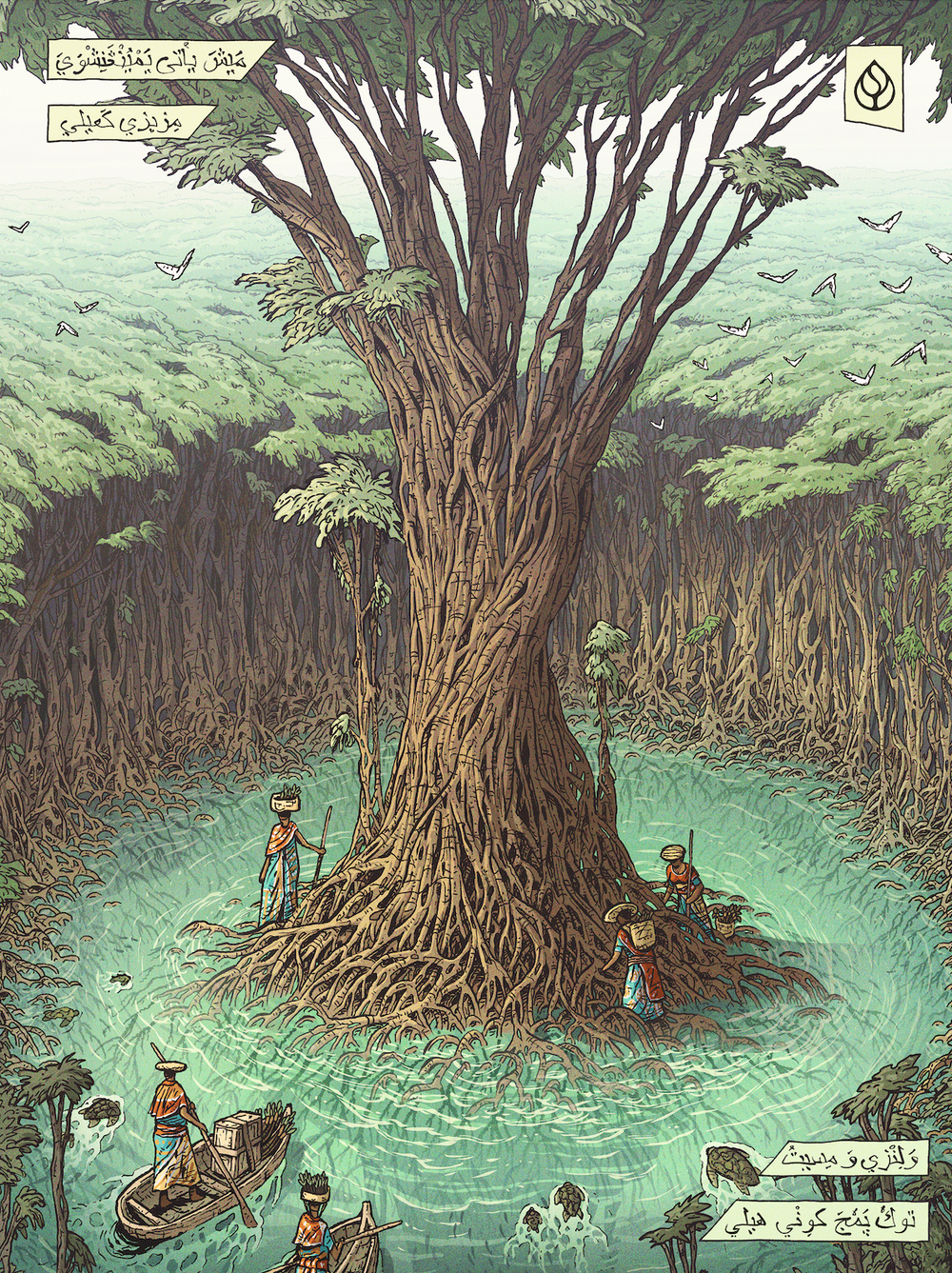
As a buyer, you’ll receive a Seatrees Token, a digital receipt of your credit purchase and retirement. This unique token is your digital receipt, complete with collectible artwork, and is issued on the Solana blockchain. Whether you’re familiar with crypto or not, accessing your token is easy: non-crypto users can securely view and manage their Seatrees Token through the Seatrees Impact Dashboard using just their email address, while crypto-savvy users can transfer their token to their own Solana wallet for full ownership and flexibility.
Blocks buyers receive a Seatrees Token with art by @benbauchau
How is my “donation” spent?
Most of the money we receive for a specific project goes toward that project. This includes the restoration itself, as well as assessments/auditing of the project, site visits and regular meetings with the project managers, developing content and stories, and updating our website with progress updates. We hold a portion of the donation to invest in new and start-up blue carbon and research projects that meet our assessment criteria. Like all non-profits, we also use a portion to fund the operations of our organization. As a registered non-profit, our financials are publicly available - and approximately 15-20% of our income goes towards operational expenses.
About Seatrees
Seatrees is a nonprofit organization that restores and protects coastal ecosystems around the world to reverse climate change, enhance biodiversity, and support local communities. We use a science-based approach to regenerate coral reefs, kelp forests, mangrove forests, seagrass meadows, and coastal watersheds. Our projects support local community restoration efforts and provide tangible ways for individuals and brands to create a more resilient planet for future generations.

Why coastal marine ecosystems?
Unlike other tree planting and carbon offset programs and projects around the world, the sole focus of Seatrees is on blue carbon coastal ecosystems. As surfers and ocean-lovers, we choose these spaces because they’re places where we play. As environmentalists and ocean-health activists, we focus on blue carbon ecosystems because:
- They’re highly effective at carbon sequestration.
- They’re critical ecosystems on the verge of collapse.
- Methods exist to restore and regenerate these ecosystems.
- The story to protect ocean health is powerful and compelling.
- It’s not too late to act, but we must act fast.

How do you ensure the impact is happening?
We have a thorough vetting process for every new project we consider. We support a limited number of projects that meet our criteria and can prove that ‘Seatrees’ are not only being planted, but that they are being protected in the longer term.
The process we go through is underpinned by science and many years of experience managing large-scale restoration and carbon sequestration projects. It’s a long process built on these seven Seatrees questions:
- Is this project connected to the ocean?
- Who's the planting partner, and how credible are they?
- Is it a region that people are interested in, and how often can we get there?
- Does this place have global/political issues? Any other red flags?
- How does this project align with the UN SDG's? What social impact does this have?
- Do the economics of this project stack up?
- Is this a scalable solution?
We try to visit all of our projects on an annual basis (more often if we can), and we require our project partners to provide regular updates.
Please share some visuals with us!
We’ll use relevant content from your website and social channels, but if you have any specific please let us know and we’ll determine whether it fits with our brand.
Do share your logo! We’ll display it proudly on our Brand Partners page.


- Al seleccionar una opción, se actualiza toda la página.
- Se abre en una nueva ventana.